The success of wildlife conservation today is no longer determined solely by the size of protected areas, but also by the ability of various stakeholders to maintain habitat connectivity within increasingly dynamic landscapes. This principle underpins the growing efforts to conserve orangutans in th...
The success of wildlife conservation today is no longer determined solely by the size of protected areas, but also by the ability of various stakeholders to maintain habitat connectivity within increasingly dynamic landscapes. This principle underpins the growing efforts to conserve orangutans in the Keraitan Landscape, located in East Kutai Regency, East Kalimantan.
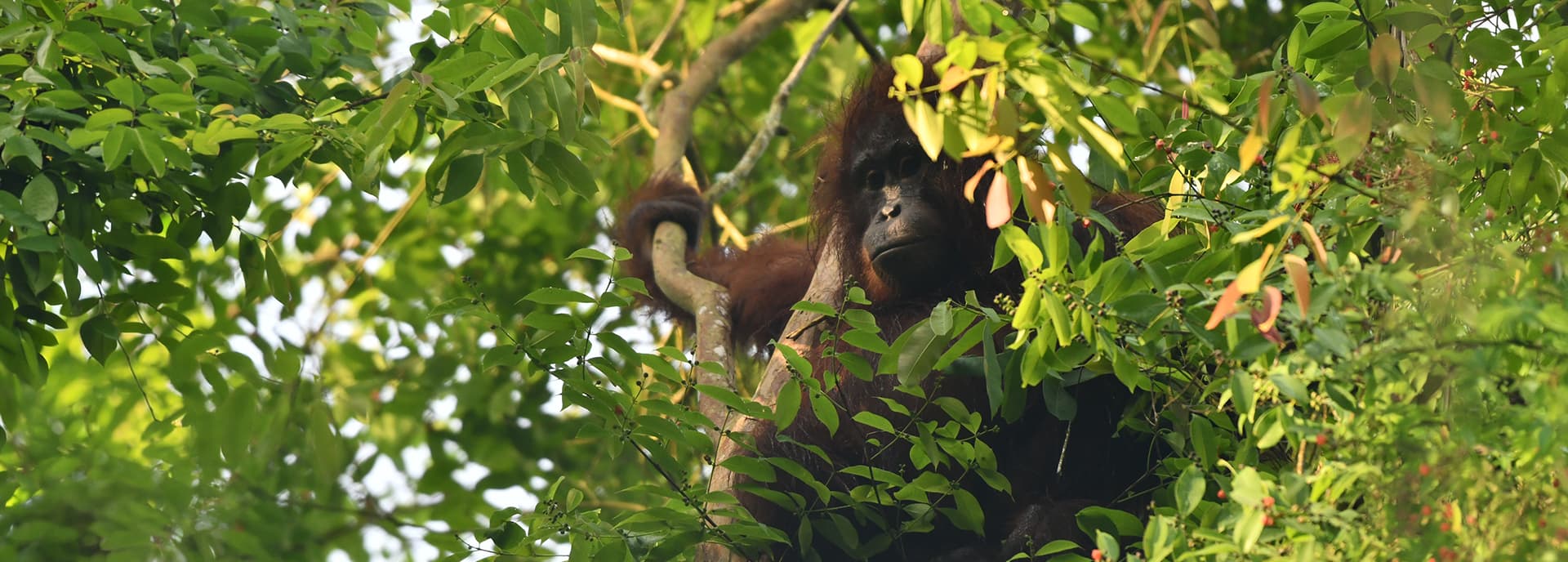
The Keraitan Landscape is one of the key habitats of the Northeast Bornean orangutan (Pongo pygmaeus morio), a subspecies of Bornean orangutan that coexists alongside various land-use activities, including oil palm plantations, forestry operations, and mining. As economic activities continue to expand and land use changes accelerate, conservation challenges have become increasingly complex. Habitat fragmentation can increase interactions between orangutans and humans while disrupting the connectivity between habitat patches that orangutans rely on for foraging, breeding, and sustaining viable populations.
Numerous studies have shown that orangutans can survive in fragmented habitats as long as food sources, shelter, and ecological corridors that facilitate movement between habitat areas remain available. These findings reinforce the importance of a landscape-based conservation approach that engages all stakeholders operating within orangutan habitats.
For nearly two decades, governments, academics, conservation organizations, and private sector actors have worked together through research, monitoring, and the development of conservation strategies to better understand orangutan population dynamics and formulate management approaches that can be applied across different land-use functions. These collective efforts have provided a strong foundation for the emergence of more integrated and adaptive conservation initiatives.
One of the key initiatives born from this collaborative spirit is the Integrated Orangutan Conservation Program (Program Konservasi Orangutan Terpadu – PKOT). The PKOT framework for multifunctional landscapes was developed by Dr. Yaya Rayadin, founder and researcher of the Ecology and Conservation Center for Tropical Studies (ECOSITROP), together with his team, beginning in 2006. As the program evolved, its implementation expanded into a multi-stakeholder initiative involving organizations and companies operating across the multifunctional Keraitan Landscape, with the shared objective of strengthening orangutan conservation efforts within the broader Kutai Landscape.
Landscape-level conservation is essential to ensuring the long-term survival of orangutan populations. Recognizing this, the Government, through the East Kalimantan Natural Resources Conservation Agency (BKSDA), took the initiative to formalize the implementation of the PKOT at the field level. As an initial step, BKSDA East Kalimantan convened a multi-stakeholder coordination meeting in August 2024 in response to the increasing frequency of human-orangutan interactions across several concession areas within the landscape.
The meeting brought together representatives from BKSDA East Kalimantan, the East Kalimantan Provincial Forestry Agency, ECOSITROP, and companies operating within the Keraitan Landscape. Through this forum, all parties reached a shared understanding that orangutan conservation cannot be carried out independently by individual stakeholders. Instead, it requires strong coordination, cross-sector collaboration, and an integrated landscape management framework to ensure effective and sustainable conservation outcomes.
In its implementation, the East Kalimantan BKSDA, the East Kalimantan Provincial Forestry Agency, and ECOSITROP serve as policy advisors, technical supervisors, and coordinators of conservation activities. Support is further strengthened by the participation of businesses operating within the landscape, ranging from coal mining and industrial timber plantations to oil palm plantations.
As part of this landscape, PT Teladan Prima Agro Tbk participates through its subsidiaries, PT Telen and PT Sawit Prima Nusantara. Together with other stakeholders, the Company supports habitat management, ecological corridor protection, field data collection, and the implementation of various conservation activities aimed at ensuring the long-term survival of orangutan populations in the Keraitan Landscape.
This collaborative approach reflects a shared understanding that orangutans do not recognize concession boundaries or sectoral jurisdictions. Therefore, coordinated landscape management is a critical factor in supporting long-term conservation success.
“The presence of orangutans outside protected areas demonstrates that the responsibility for biodiversity conservation does not rest solely with governments or conservation organizations. Companies operating within the landscape also play an important role in maintaining habitat corridors and ensuring that ecological functions remain intact,” said Dr. Yaya Rayadin, Chair of the Sustainability and Corporate Social Responsibility Committee of PT Teladan Prima Agro Tbk.
The Company's commitment to biodiversity conservation is also reflected in its sustainability governance, which emphasizes a science-based approach. The involvement of Dr. Yaya Rayadin, an academic and conservation expert from Mulawarman University, within the Company's sustainability governance structure strengthens the integration of environmental and biodiversity considerations into strategic decision-making.
For PT Teladan Prima Agro Tbk, orangutan conservation extends beyond the protection of a single species. Orangutans are considered an umbrella species whose presence reflects the overall health of tropical forest ecosystems. By protecting orangutan habitats, other vital environmental functions, including biodiversity conservation, carbon storage, and the sustainability of landscape hydrological functions—are also preserved.
The ongoing conservation efforts in the Keraitan Landscape demonstrate that economic development and environmental conservation do not have to be mutually exclusive. Through strong collaboration, science-based approaches, and a shared commitment among stakeholders, conservation can become an integral part of sustainable landscape management.
“The Keraitan Landscape provides an important lesson that development and conservation do not have to be at odds with one another. Through science-based approaches and strong collaboration, we can create landscapes that are economically productive while also supporting the conservation of orangutans and other biodiversity,” Dr. Yaya Rayadin concluded.
Moving forward, PT Teladan Prima Agro Tbk will continue to support initiatives that promote integrated and sustainable landscape management. The Company believes that collaboration is key to maintaining a balance between development needs and environmental conservation, while creating long-term value for nature, communities, and future generations.